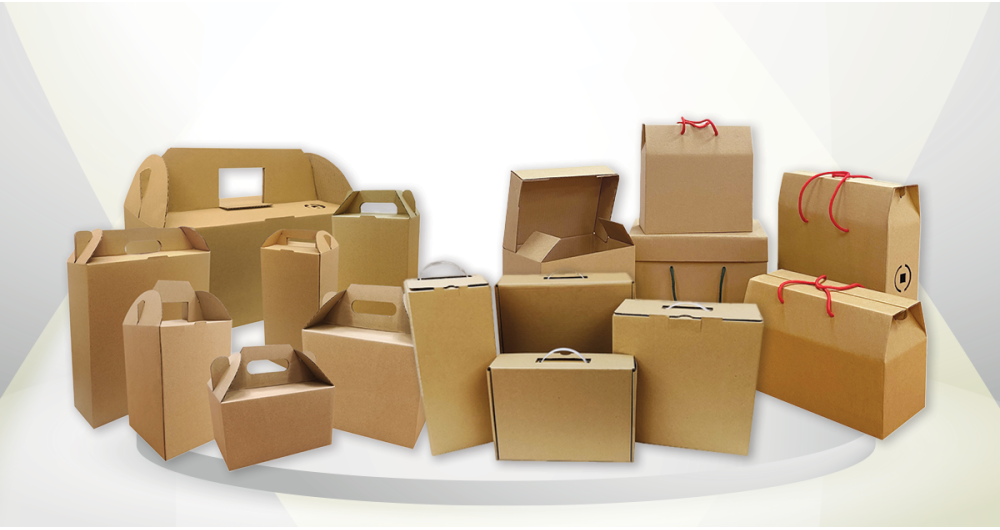
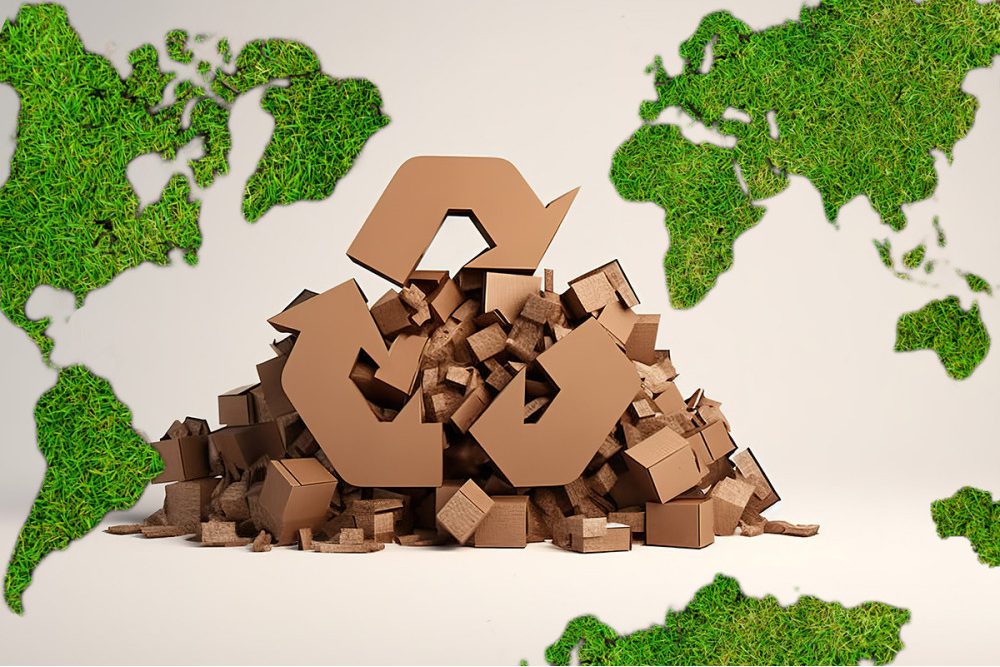
Over the past few years, the number and frequency of client demands for different packaging have increased rapidly in the expanding e-commerce shipping due to globalization, digitization, and competitiveness. However, according to Escursell and other experts (2021), e-commerce packaging produces a significant amount of non-recyclable trash. Referring to international standards, the European Union rewrote the law under the “Circular Economy Package” concept and proposed new rules that all European Commission member states were required to follow by 2030. These rules included reducing the volume of municipal landfills by at least 10% for environmental sustainability and eco-friendliness and recycling at least 75% of packaging waste (European Commission, 2015). Hence, industries are increasingly shifting to eco-friendly packaging solutions to minimise their environmental impact in today’s eco-aware society. Given its numerous sustainability benefits, digital printing for corrugated box packaging is one of the best alternatives. For companies looking to promote green initiatives, corrugated packaging boxes deliver a green solution for their pollutants-free materials and environmentally conscious sourcing.
Highlights Using Corrugated Packaging Materials for Environmental Sustainability and Eco-Friendliness:
Green packaging solution crafted from recycled materials
Comprising papers, such as cartons and old newspapers, are some of the most extensively recycled materials worldwide; cardboard with corrugations uses recycled paper as its base material, including three separate layers composed of paper with an inner and outer liner, as well as a corrugated sheet within, offering varied degrees of durability and thickness. Corrugated packaging is made by at least 70-90% of recycled papers from materials like cartons and old newspapers, and some other forms of packaging even contain 100% recycled old materials. Businesses can use this material that can be recycled as an environmentally beneficial and green packaging option because it can be effortlessly broken down and regenerated into a corrugated box. In addition, most corrugated packaging is made with a lower carbon footprint, without dyes or bleaches, which increases its recyclable nature compared to materials that contain pollutants.
Customers benefit from its high reusability
Corrugated packaging can also be reused, which lowers packing expenses and helps the planet. Numerous types of corrugated packaging are reusable and foldable. The majority of packages are not thrown out right away because of their longevity. Thanks to its durable nature, lightweight, and capability to bear many different kinds of weights, corrugated packaging is frequently utilised for all sorts of items. Customers can also use them as protection for the floors when remodeling or to store documents. Therefore, the customers could expect a longer lifespan of the corrugated box for multipurpose use.
Energy-saving solution for the planet
There is no denying that the cardboard and corrugated packaging industry has a comparatively small worldwide carbon footprint—roughly 1%. Renewable energy sources, including biogas, biomass, and hydroelectricity, are frequently used by industries and manufacturers. Waste materials are frequently used as fuel in paper and cardboard production. Due to their recyclable features and durability, corrugated cardboard boxes are all-time favourites for customers. By using cardboard and corrugated box packaging, we reduce the production process, lower transportation costs, and reduce carbon dioxide emissions due to its reusability. Not to mention that producers can utilise the energy saved by recycling cardboard to improve their box gluing machines and other production tools; it is rather productive and cost-efficient.
Innovative Design and Sustainable Digital Printing
In packaging applications, cardboard and corrugated box packaging are incredibly adaptable, easily absorbing ink and adopting an array of designs. A stylish, premium physical appearance can be guaranteed by using an eco-friendly design technique. Additionally, the just-in-time manufacturing technique of digital print enables quantities ordered and restocking timelines to be customized to the brand’s requirements, leading to lowered warehousing, organised inventory, and less wastage. Less overproduction is preferable for the customers who practice biodegradable and sustainable packaging for environmental benefits. With printing to the board directly, a registration procedure is not required. The quantity of sheets discarded during installation is greatly decreased as a result.
Another highlight is digital printing eliminates the need for print plates, which lowers the utilisation of raw materials and setup-related manual labor. This reduces the environmental impact of plate manufacturing, storage, and dumping while also greatly conserving resources and improving operational effectiveness. Furthermore, the application of water-based inks, which are entirely biodegradable and non-toxic, produces excellent printings on corrugated surfaces enables the secure disposal of wastewater from municipalities without the need for prior treatment, and guarantees environmental safety.
To summarise, corrugated packaging has many advantages that promote ecological responsibility and sustainability. Multiple uses are made possible by its reusability, which lowers pollutants and packaging expenses. Utilising recycled materials throughout manufacturing also lowers carbon emissions and preserves energy. It is a flexible and environmentally responsible alternative for companies looking for environmentally friendly personalised corrugated packaging. The options offered by digital printing and finishing will not let down any businesses searching for a stylish and unique design. Contact us for an instant free quotation and more information to get started earlier.
References
Chowdhury, T., & Kabir, G. (2024). Life Cycle Assessment (LCA) of Package Deliveries: Sustainable Decision-Making for the Academic Institutions. Green and Low-Carbon Economy, 2(1), 1-13.
Escursell, S., Llorach-Massana, P., & Roncero, M. B. (2021). Sustainability in e-commerce packaging: A review. Journal of cleaner production, 280, 124314.
Petrenko, L., Puzko, S., Lavrenenko, V., & Gernego, I. (2024). Fostering Sustainable Packaging Industry: Global Trends and Challenges. European Journal of Sustainable Development, 13(2), 63-63