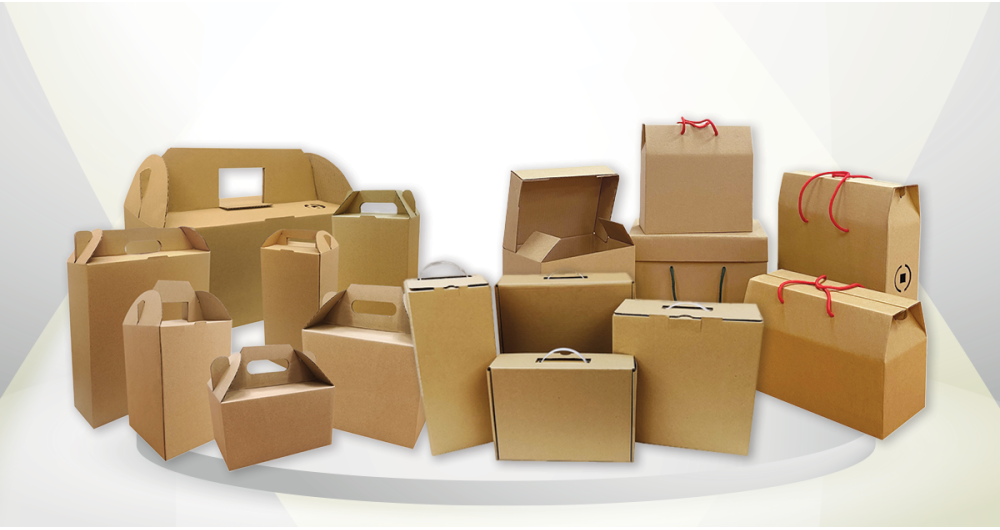

Folding boxes are a flexible and popular packaging solution made from corrugated cardboard or paperboard. These boxes are meant to be folded and formed into different box styles, providing a reasonably priced and environmentally friendly approach to protect a wide range of products. Their rigidity, strength, and design flexibility make them widely utilised in several sectors like food, beauty products, and pharmaceutical products. Folding boxes not only offer good product safeguarding, but they also allow for plenty of brand marketing and personalisation, resulting in an effective packaging solution for firms trying to improve their product appeal. With ideal structural stability and design capabilities, along with the flexibility to unfold the boxes for effective keeping and shipment, the practical specifications of the corrugated boxes; dimensions, and weight of the products sealed within matter in the long run to control the operational budget while also enhancing brand exposure and representation.
Paperboard and Corrugated Folding Boxes
There are multiple folding boxes with distinctive features and best suited to particular packing requirements. Paperboard and corrugated folding boxes are the two main styles of folding boxes. Paperboard folded boxes are relatively versatile, lightweight and easy to assembling as they are composed of just a layer of thick paper-like material. Given their basic and clean design, these boxes are frequently utilised for retail merchandise. They are commonly used in the grocery, beauty products, and pharmaceutical products sectors since they offer a visually appealing and useful packaging options. Brands can develop attractive packaging that outshines their competitors on supermarket shelves by customising paperboard folding boxes with different choices of embellishments for product branding and promotion.
On the other hand, corrugated boxes are a durable packaging option with a structured formation. They consist of a corrugated layer sandwiched between two durable outer layers. They are known for their resilience, and reusability, and offer extended safeguarding for products during their transportation and warehousing. Corrugated boxes are used in several industries, including e-commerce, electronics, and items that are perishable or fragile, for economical and effective protection during transit.
When business owners have corrugated packaging in mind, they will automatically presume that brown boxes are for transport with simply one or two colours of traditional printing technology. With the latest printing technology, they are now able to print in full-colour advocating your business physically at the shop while also providing additional product protection that alternatives can hardly offer. Some businesses have concerns that corrugated box packaging would not appear as attractive as paperboard folded boxes. However, this assumption has been debunked. With today’s digital printing and finishing performance, a corrugated box may fully compete in the commercial channel with their high-quality graphic printing and white-ink digital printing while providing rapid market entry efficiencies.
YF Packaging’s Folding Box Styles and Their Applications
Regular Slotted Container (RSC)
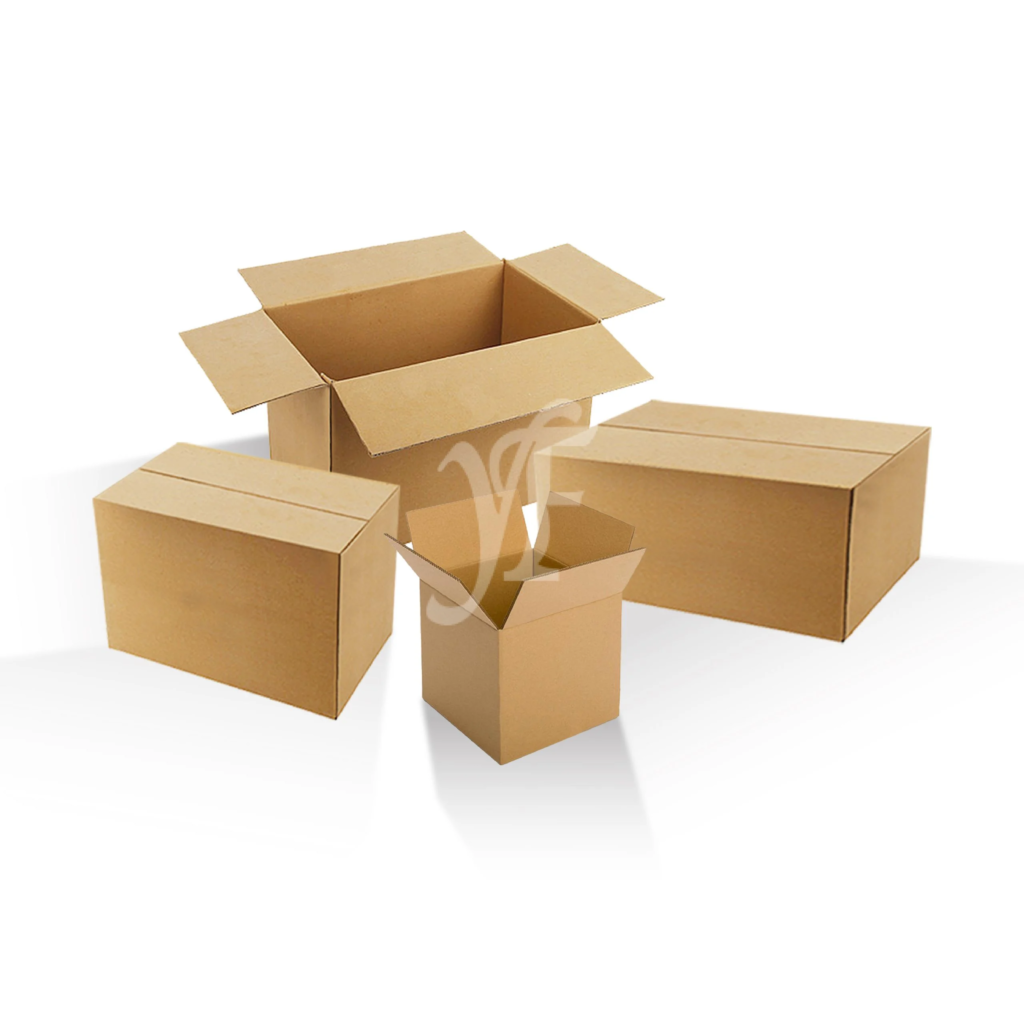
Figure 1: Standard Regular Slotted Container
Source: YF Packaging
Regular Slotted Container (RSC) is the most basic corrugated box in the packaging sector. It is a box-shaped design composed of a single layer of corrugated cardboard with the same length of wings on both top and bottom that come together in the center when sealed. It is a traditional regular slotted container. Besides, RSC cartons are often composed of 100% materials that are recyclable. The structure allows for quick adhesive sealing, and they may carry an array of bulky items of different dimensions. This makes RSC cartons an increasingly common choice for transporting products. It has often been applied in common consumer items, personal care products, beverages, electronic and electrical appliances, office supplies, automobile accessories, industrial products, toys, and vulnerable items.
Apart from the standard RSC, there are several types of regular slotted containers with specific differences, i.e., Full Overlap Carton (FOL), Integral Divider Container, Half Slotted Container (HSC), and Overlap Slotted Container (OSC), could be applied in different sectors, for different dimensions and weight of the products packaged. In comparison to RSC boxes, FOL boxes offer more cushion, stacking strength, and protection at the bottom and top. This is due to FOL being built with a whole flap that fully overlaps another flap instead of joining in the center of the structure. It turns out that these boxes can handle bulky items, but they tend to be more expensive for manufacturing due to the more material required.
HSC box is another corrugated box type that is similar to an RSC box but for one set of flaps only at the bottom of the box. In general, HSC cartons are either open at the top of the box or have a cover on it. The container is intended to offer quick access to the item within the box. Other than that, as the name indicates, an OSC box has two identical flap lengths that overlap over a minimum of an inch. The box can be readily sealed using glues, tapes or, more often, staples integrated through the overlap. This layout is frequently employed when the box’s length is significantly longer than its breadth, leaving a large space between the internal flaps. The sealed overlap helps keep the external flaps from easily unraveling.
The Integral Divider Container is a tailored box with inbuilt divisions that facilitate effective item organisation. Small amounts, lightweight products would benefit from its storage and transit. However, it is not suggested to handle heavier and large amount items as its easy to collapse during shipment. By eliminating the need for additional partitions, this container layout saves packaging time and room for storage. It offers appropriate packaging for cylinder-like and cuboid-shaped items, such as bottles and electronics parts.
The Snap Lock or 1-2-3 Bottom Container with RSC Top is formed by each of the four folds that make up the bottom panel is die-cut. Effortless to begin setting up, the consumer folds the main bottom panel initially, followed by the two end panels. When the last bottom flap has been folded and pressed in the middle, the flap is stuffed into the gap formed by the remaining panels. The type is ideal for small-volume products without automatic assembly equipment. As the bottom is not completely adhesive, it may not be appropriate for bulky items.
Folders and Trays
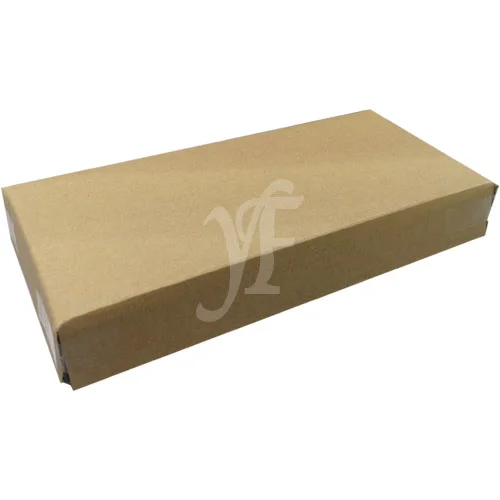
Figure 2: Five Panel Folder
Source: YF Packaging
This Five Panel Folder (FPF) features an extra flap, known as the fifth panel, that fully covers the side panel of the box. When tightly sealed, three sides include multiple layers of corrugated material, providing additional cushioning and stacking capacity. Additionally, One Piece Folder (OPF) uses just a single piece of corrugated board to produce a flat, uninterrupted bottom. The increased flaps have grooves so that it is easier to fold and form the sides of the box. The box’s top is formed by a set of flaps that join at the center
The Roll End Tray with Self-Locking Ends sturdy packaging solution that is comprised of a single layer of corrugated board, resulting in an intact bottom. The ends of the tray fold over and lock into place firmly without needing tape or any adhesives, offering extra layers of corrugated to reinforce the end of the box. The locking design is known as Walker Locks, resulting in a strong and secure closure that is resilient to being opened accidentally during shipping and storage. Folders and trays are mostly used for retail and agricultural industries as displayed boxes.
Telescoping Boxes
Moreover, telescoping boxes consist of a Full Telescope Half Slotted Container, Full Telescope Design Style Container (FTD) and an Octagonal Double Cover Container. FTHS box is composed of two halves of RSC boxes that fit together to form a tightly closed box. It serves to safeguard the box’s contents while they are being transported. The top and bottom parts are tray-shaped formations with flaps from each side. When the two parts merge, the top box slips over the bottom box tray to cover it fully. The FTHS box contains two layers of material on the sides and ends for safeguarding the items and for stacking resilience. The top can simply be taken off to see the products within. FTHS boxes are frequently utilised for tall or bulky items that are troublesome to pack into a box. FTHS boxes are suited for items that demand an extremely sturdy box. The multi-layered structure creates a sturdy support, ensuring product safety throughout shipping and warehousing. Corrugated packaging also serves as a long-lasting protection between items and humidity.
Besides that, Octagonal Double Cover Container is structured with extra panels to make it octagonal. Both of the coverings at the top and bottom of the box are convertible and mutually fitted with each other. It is ideal for applications of the cylindrical items that are awkwardly taller or heavier, and it is difficult to be fitted into a regular box.
Figure 3: Full Telescope Design Style Container

Source: YF Packaging
Furthermore, FTD container is also known as a Top & Bottom Box. This container typically consists of two different components: a top component that serves as the cover and a bottom component, that slides overlapping one another, or an independent body. A standard telescope boxes consist of a top or cover that reaches not less than two-thirds of the way downward of the bottom component. If the closure reaches below two-thirds of the depth of the box, it could only be categorised as a box with a cover. This container is thinner than the rigid box, their strong design, along with cheaper transportation costs, makes them the best alternative for a variety of small-size items. They are primarily utilised for lightweight products in the retail sector, gift packaging, e-commerce sector, and other areas that require an eye-catching design.
Conclusively, different corrugated folding box styles will now not only serve the purpose of product protection and shocking-absorption cushion, but wholesale organisations or retailers need to display their extra-size products, i.e., electrical and electronic appliances, vulnerable items, i.e., glass bottled beverages, or perishable items, i.e., fruits, in high-quality graphic images on the packaging for branding and marketing purposes, yet still in the affordable costing. YF Packaging serves the global packaging demand with the shortest turnaround time, due to the latest white-ink digital printing technology, and aesthetic artwork design, with the instant packaging quotation to come out with the lowest cost packaging solution in the packaging industry to the customers. Stay tuned to the next blog for more info about the company’s popular paperboard and corrugated folding boxes and reach us for free packaging consultation.