

The crucial element of your corrugated packaging affects functionality and expenditures on packaging. People will eventually come into contact with cardboard in daily life regardless of the amount of packaging used. One should be aware of the factors that affect the strength or cost of corrugated cardboard. What material is used to make it? What effect might this have on your packaging’s success? Know more about the composition of the cardboard materials, including walls, liners, flutes, or gsm to plan optimum packaging in terms of performance and cost.
The Formation of Corrugated Cardboard Materials
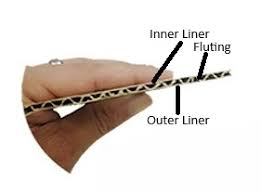
Before delving into the more intricate elements, it is helpful to illustrate how a corrugated board is created. A typical corrugated cardboard sheet is composed of three parts. These consist of two layers of paper, the outer and inner liners, sandwiched by a corrugated or “fluted” sheet in the middle. During manufacturing, the fluted material is adhered to the flat paper liner on both sides. The glue gives the durability and sturdiness of the paper while also securing the flutes in place.
Below is a simple diagram that shows the outer and inner liners and fluting in between.
Sources: YF Packaging Sdn. Bhd.
Usage of Papers in the Formation of Corrugated Cardboard
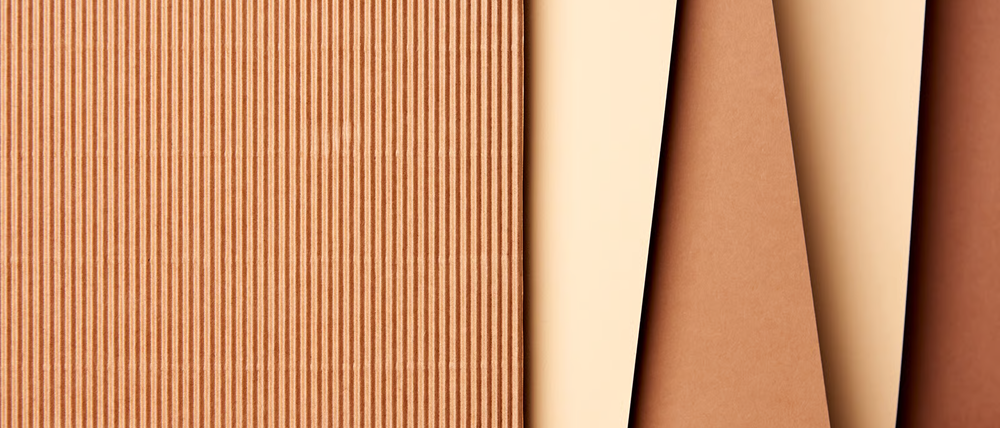
The kinds of paper used are one of the main elements that determine the characteristics of the corrugated material. Two primary paper types are typically used for the liners, even if cardboard is utilised extensively. These are referred to as Test and Kraft liners. Softwood trees are used to make Kraft paper. It is the most durable and easiest material to print on because of the “virgin” fibers. It is, therefore, the most widely utilised exterior liner when choosing materials for packing and corrugated boxes. The test paper is a sort of duplex, or double-layered, paper. Test paper, which is recycled, is frequently used for the interior liner because it is not as sturdy as Kraft or as simple to print on. Hence, it is cheaper than Kraft paper.
Board Styles
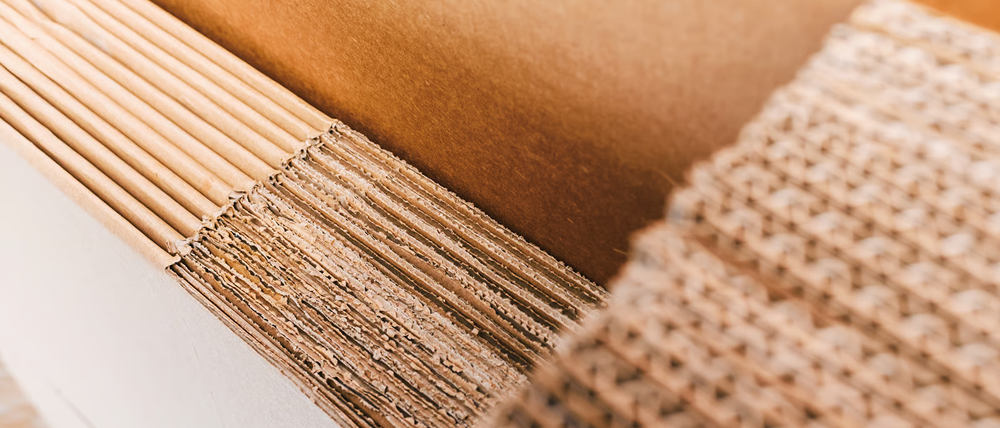
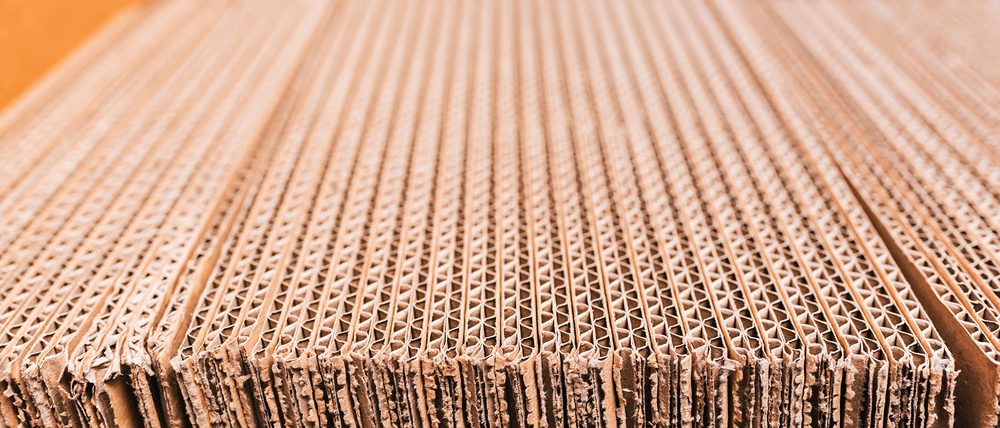
It’s also important to think about the type and intensity of fluting. The main components of a corrugated board are the single fluting and the two layers of liners. We call this a “single wall” board. Refer to the diagram shown below. Moreover, to create what is referred to as “double wall” or “double-walled” material, an extra fluting layer and more liner can be inserted. This could offer greater strength and stability, which makes it ideal for packing heavier objects and providing additional safeguards for potentially higher-value or sensitive items. Other than that, a “triple walled” grade can also be utilized if the objects that you are delivering are notably massive or weighty (such as machinery for industrial use, car components, etc.). This adds an extra liner and additional fluting layer, as recommended. A sample is shown below.
Last but not least, the flute type is the last feature of the corrugated material that can impact its functionality, weight, and price. It is possible to support different functionality by varying the height and size of the flute, which is the “corrugated” layer between the two liners. This can range from extremely small flutes, like “E,” which are used to make lightweight retail cartons and are excellent for printing on, to more abrasive flutes, like “A” or “B,” which are typically used for transport packaging materials. Similar to the aforementioned instances, one or more flutes can be combined with double-walled material to produce a grade like an “EB” or “AB” flute. This may provide a more stable structure.
Uses of Single Layer and Double Layer
A single layer is meant as a single flute medium is sandwiched by two liner layers. The most used board form on the market is a single-layer board, which is compatible with a variety of packaging uses including commercial displays and postal boxes. A double layer is meant as two corrugated flute layers are inserted between three-liner sheets. For greater weight or those that need a more sturdy box and shipment support, double-layer board is sometimes chosen.
A-Flute Corrugated Cardboard
YF Packaging generally offers a single layer of flutes A, B, E, and F, and a double layer of flutes A-B, and E-B. A stronger compression strength flute type available is A-Flute, which is what constitutes the initial basic fluting for corrugated boxes. With a wall thickness of about 5 mm (or 1/4 inch), it’s an ideal pick for items that require an additional buffer effect for the easy-fragile items. It can be utilised for thick corrugated protection or double walls, usually comprising 30 – 36 flutes each 30 cm. The middle layer’s A-Flute may provide greater flexibility and buffer effect, efficiently absorbing stacking pressure. It is ideal for sensitive products, such as electronic appliances and glassware.
B-Flute Corrugated Cardboard
The primarily utilised flute for packaging purposes is the B-flute. In addition to being incredibly adaptable, it is 3 mm thick (or 1/8 inch). It performs well and consistently across all corrugated box packaging types. It typically has a thickness of 1/8 inch and a total of 44–50 flutes each 30 cm. Typically, canned foods are packaged in B-flute corrugated boxes. It offers good compressive resistance along with steady stacking capability. The B flute’s resistance to crushing and punctures makes it suited for interior packaging materials. It is also fit for heavier but hard, small-size items. Among the main uses of B-flute cardboard are retail packaging, food sector packaging, and customised printing industries. Additionally, this flute is perfect for printing designs, especially images, logos, and text straight onto corrugated cardboard.
E-Flute Corrugated Cardboard
It has a thickness of about 1.5 to 1.6 mm (or 1/16 inch), and because it is the second thinnest corrugated box, it is more appealing and fit for packing more expensive items. Additionally, in comparison with standard box-board materials, corrugation offers greater durability and protection. Improved bi-directional rigidity, reduced surface deformation, and strength retention even in strong humid conditions are readily achievable with E-Flute as the outer layer. Those who sell high-end or luxury products can choose this kind of quality because it has a classic vibe and is an eco-friendly alternative. E-flute board is the second most often used corrugated box, based on the packaging sector’s accessible figures. Since it is an environmentally conscious form of packaging, the majority of businesses have begun adopting this sustainable approach. With 90 flutes for each foot, the E-flute board makes it simple to print high-quality graphical images. It is more appropriate for commercial packaging.
F-Flute Corrugated Cardboard
The F flute, which is around 0.8 to 1.0 mm (or 1/32 inch) thick, is the thinnest corrugated flute on the market. It is generally fit for small-size and lightweight packaging. The cardboard has 128 flutes on each foot and is also becoming a very common kind of corrugated packaging box. The F-Flute Cardboard’s aesthetic design and craftsmanship are very striking because of the huge quantity of flutes. It is also a more environmentally friendly option than conventional boxes. Fast-food chains, jewelry, and beauty-related items are just a few of the numerous sectors and enterprises that use cardboard boxes with F-flutes for packaging. It is also fit for an additional liner for interior box packaging. For certain consumer items, the F flute is perfect for rigid packaging requirements, i.e., plastic containers, small-size metal cans, and glass bottles.
AB – Flute Corrugated Cardboard
AB – Flute is a double-walled corrugated box that is approximately 7 to 8mm thick. It is the integration of A-flute and B-flute board styles. To create a distinctive flute structure that provides an even distribution of resilience and thickness, AB-flute corrugated board integrates an A-flute at the top layer, which has a fluting dimension of about 5mm, with a B-flute at the bottom layer, which has a fluting dimensions of about 3mm. While the B-flute improves rigidity and durability, the A-flute delivers extra buffer function and compression strength. As a result, the corrugated board is thinner and more lightweight than conventional A-flute board, but it still provides additional strength and protection. AB-flute is a flexible choice for a variety of packaging applications because it strikes a balance between support, stacking durability, and sturdiness.
EB – Flute Corrugated Cardboard
As the term implies, the EB-flute is a double-walled board style that is between 4 and 4.5 mm thick. It is the combination boards of E-Flute and B-Flute. The interior layer used of B-Flute might provide sufficient stiffness and surface compression resistance to endure internal pressures applied to the box walls. This grade uses both a thinner (E) and a somewhat thicker (B) flute, it offers a great equilibrium between durability, printed graphic quality, and shipping protection.
The Significance of Packaging Material Screening
The efficiency and expense of corrugated material can be significantly impacted by a wide range of alternatives and factors, as the previous section ideally discussed. This consequently impacts your packaging’s functionality and typical cost. Like many items, the cost increases with the amount of boards used to achieve a balance between durability and graphic quality. Not to mention that, it’s possible that using better liners for a higher-quality print or a more opulent finish will raise the price. Hence, it is crucial to determine whether the board grade you are choosing for your packaging is indeed the optimum option for your needs. As a result, several hidden risks could result in you overspending on your packaging. Nonetheless, choosing the incorrect board grade could affect the cost-performance value of the products sold.
Over-used material grades happen when a particularly hefty weight of the board is used to package a costly or vulnerable item. Although excess usage of materials could help to avoid the damage issue, a lower board type might offer equivalent satisfactory results. For example, there might be no apparent improvement in stacking strength if a double-walled board style is changed to a heavy-fluted single-wall board for packaging. The variance between a lightweight board grade and a heavier grade can add up to substantial cost savings gradually if your courier service or transportation provider bills by the total weight of each consignment.
When the board styles and flute types vary, so does the stacking strength. Hence, a physical assessment must be practiced. Practically, narrower flutes decrease distortion but also decrease stacking strength, while wider flutes increase stacking strength but cause more distortion. While smaller corrugated boxes with wider flutes may undergo extended deformation, bigger containers with narrow flutes may collapse and deform during compression tests. When designing boxes, the order of flute pick should be A, followed by C, B, and E based on distortion and compression resistance. As a result, based on the situation, a B flute could be given priority due to its reduced distortion provided it offers adequate stacking strength, C or A flutes are as follows.
The Bottom Line
The notion that a move as straightforward as switching between different types of corrugated boards may have a significant impact on packaging expenses frequently surprises people. But, since the cost of materials and containers is going up, and switching board grades don’t necessarily mean compromising efficiency, now can be a great time to make sure you’re utilising the best material for your needs. These board structures are incredibly effective at safeguarding packed goods because of the planned combining of various board designs and flute kinds, which capitalises on their significant advantages. Know more budget-friendly packaging options to optimise your packaging cost, to save unnecessary expenses.